

READ EXPERT BLOGS ON EMDR, PTSD, TRAUMA RECOVERY, SOMATIC THERAPY, EXPAT AND RELATIONSHIP SUPPORT—AVAILABLE IN LISBON, LONDON, AND ONLINE WORLDWIDE.
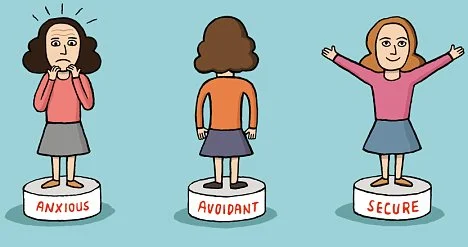
Can our childhood attachment determine our social intelligence?
Attachment styles are widely talked about in psychology these days. The term refers to the social-behavioural impact of our early relationships with our key caregivers. Researchers have recentl investigated how attachment styles affect our current relationships. A study published in the International Journal of Psychological Studies (Vol. 8, No.4) looks at whether attachment affects our social intelligence.
Attachment styles are widely talked about in psychology these days. The term refers to the social-behavioural impact of our early relationships with our key caregivers. According to the theory of Bowlby (1991), those of us who experienced a warm and stable relationship with our primary caregivers have ‘secure ‘attachment. This means feeling a strong and secure sense of self and a trust and openness towards others. Those with ‘anxious-ambivalent’ attachment, are overly concerned with the other and can come across as needy. And those with ‘avoidant’ attachment deal with their distrust of others by avoiding intimacy.
Attachment affects how a person develops and their mental wellbeing, over the course of their life. Researchers have investigated how attachment styles affect our current relationships. A study published in the International Journal of Psychological Studies (Vol. 8, No.4) looks at whether attachment affects our social intelligence.
What do we mean by social intelligence? It can refer to social sensitivity, social foresight, social skills, social competence, social effectiveness, sympathy, emotional skills, social anxiety, social adjustment, the ability to interact with others and emotional intelligence. These are evidently all very important skills to thrive socially and professionally. The researchers of the current study assert that social intelligence is necessary for ‘social adjustment and success in social life’. They go on to say that people with secure attachment are more open to new learning. Individuals with insecure attachment tend to have poor social skills and are distrustful of others which leads to a lower sense of self-efficacy.
Since there is no universally approved definition nor one scale that is used to measure social intelligence, the findings of the research study are limited to the researchers’ definition which included 42 questions on social knowledge, social effectiveness and social competence. 404 female students participated at Riyadh university in Saudi Arabia. Their attachment styles were measured using the Adult Attachment Scale.The questions the research tried to answer were 1) Which attachment styles are prevalent at the university and 2) is there a link between attachment style and social intelligence?
The results showed that most of the students had secure attachment. A positive relationship was found between secure attachment and social knowledge, competence and intelligence. A statistically negative relationship was found between insecure attachment, social competence and total social intelligence. A statistically negative relationship was also found between avoidant attachment and social knowledge. However, there was no significant relationship between avoidant attachment style and social intelligence. Therefore secure and anxious-ambivalent attachment styles do affect social intelligence whereas avoidant attachment styles do not.Going by this research, it seems that those with anxious attachment styles (estimated at approximately 30% of the population by Ainsworth et al 1978) are the worst off. They are the most likely to be plagued with issues of low self-efficacy, which is the self-confidence to take the initiative in social communication and to establish new friendships. However, the study points out that the results differ from other findings where no link was found between anxious attachment and social skills.
It can be argued that the research is limited as it defines only three types of attachment. These categories do not always accurately describe an individual’s pattern which might be a mixture of more than one. There has also been critique of using the Adult Attachment Scale which consists of questions answered only by the participant, as it is questionable how well we truly see ourselves. Other studies use interviews and reaction time tasks to gage attachment styles. We also need to bear in mind that the participants of the study were exclusively women in a country which has a fundamentalist Islamic tradition. Would the results be the same in a mixed college in the States?
Nevertheless, the research makes some recommendations that are worth considering on a wider level such as taking into the account the needs of those with insecure attachment when designing educational programmes.

Positive Thinking - Can you imagine yourself into happiness?
Fantasy has been around for as long as humanity. As George Bernard Shaw said, "Imagination is the beginning of creation. You imagine what you desire, you will what you imagine and at last you create what you will”. Creative visualization is widely written about these days. Imagery is also used by cognitive behavioural therapists, amongst others. This study looks at the effects of self-guided imagery. Specifically, researchers Velikova et al. investigated whether self-guided imagery can increase wellbeing.
Fantasy has been around for as long as humanity. As George Bernard Shaw said, "Imagination is the beginning of creation. You imagine what you desire, you will what you imagine and at last you create what you will”. Creative visualization is widely written about these days. Imagery is also used by cognitive behavioural therapists, amongst others. This study looks at the effects of self-guided imagery. Specifically, researchers Velikova et al. investigated whether self-guided imagery can increase wellbeing.
The research is important because up till now only the efficacy of guided imagery has been researched. Imagery is used in cognitive behavioural therapies to help individuals overcome issues such as phobias, anxiety and depression. For example, someone worried about doing a public presentation would imagine themselves getting through it and successfully coping with any challenges. According to Laing, imagery influences both physiological and behavioural responses whereas changing one’s thoughts as per cognitive therapy, does not. Guided self-imagery has also proven effective for healthy individuals to increase optimism, improve relationships, promote empathy and social behaviour. It can be tailored to cover issues that individuals are struggling with. Therefore, self-guided visualisation is a potentially cheap and effective approach to improve wellbeing on a large-scale, whilst meeting the needs of individuals. In these times of cash-strapped public health services with long waiting lists, or expensive private therapies, this is an attractive alternative.
For the research, the 30 participants did 12 weeks of self-guided imagery sessions lasting 15-20 mins each. These were sandwiched in between two visualization training workshops at the beginning and end of the 12-week period which included and EEG.
One of the reasons for the lack of evidence about the effect of self-guided imagery is due to the lack of evidence of how visualizing affects the brain. Therefore, the researchers developed hypotheses to address this. They hypothesized that 1) psychological test results would reflect increased wellbeing after the training was completed 2) there will be changes in EEG results explainable by the training specifically a) changes in the regions participating in the imagery and emotional processing, b) increased EEG connectivity generally and specifically of theta waves which are linked to creativity.
The training consisted of learning techniques to:
· cope with past traumatic events, working with it till they could see the story with a positive ending.
· goal achievement of future events. To describe in as much detail as possible the goals and steps to achieving them and then visualize as if already achieved.
· To improve social interactions. To imagine future relations as having tranquility, openness.
· To feel more positive on the day-to-day. When visualizing tomorrow thinking of calmness and freshness and peace and satisfaction at the end of the day.
The psychological testing after the training programme showed that participants felt less depressed, perceived themselves as more effective, experienced life as more meaningful and felt more satisfied with life.
The EEG results did show increased activity in the medial prefrontal cortex which is linked with imagining pleasant scenes. Therefore, it could be argued that this was because of the imagery training.
The EEG results also showed increased activity between the inferior temporal gyruses from both hemispheres during delta waves. These waves are present during deep sleep. There was also increased activity between the posterior cingulate cortex and right Inferior temporal gyrus during theta waves. Theta waves are experienced during light sleep or an intensely relaxed state such as deep meditation.
The researchers recognized that some of the same brain changes, for example in theta and delta waves could also occur in relaxation, however they pointed out that the changes in the DMN network would not occur in relaxation. It was also suggested that research would need to be conducted using more active imagery to ascertain whether the brain changes occurred due to the imagery and not due to the relaxation.
There were a small number of participants (30) so more research is needed to corroborate these results. Further research is also needed on which parts of the brain are implicated in visualization, to ascertain that the improved wellbeing is due to the self-guided visualization. There was also a bias towards women, 24 out of 30 and towards those who already had sub-threshold depression, 22 out of 30. One could wonder if there is a gender difference in the ability to visualize and whether this would affect results. One could also question whether the results would be significant if all participants were emotionally healthy. The research also doesn’t talk about those individuals that struggle to visualize anything. Despite this, the results are exciting.
If as George Bernard Shaw says, ‘imagination is the beginning of creation’, then this is a potentially powerful tool to shape our worlds.
Journal Reference:
Svetla Velikova, Haldor Sjaaheim, Bente Nordtug. Can the Psycho-Emotional State be Optimized by Regular Use of Positive Imagery?, Psychological and Electroencephalographic Study of Self-Guided Training. Frontiers in Human Neuroscience, 2017; 10 DOI: 10.3389/fnhum.2016.00664

How To Improve Self-Esteem and Self-Confidence.
If our self-esteem is based on achievements and praise it is like the little pigs House of Straw. One puff and it is all blown down. What is missing is a robust and continuous sense of self-worth which is independent of our achievements whether they be glorious, embarrassing, admirable or downright disappointing.
Failing demands we unshackle our sense of self from our performance. It means we separate our sense of being a lovable and worthy human being from the sometime idiotic, regrettable acts we might commit as a fallible person. It means growing up and connecting with our innate sense of self- worth rather than viewing ourselves through the lens we think others see us through.
Get over yourself! How leading a life more ordinary can lead to the Extraordinary!
I was facilitating a therapy group the other day and one of the members talked about what she was learning from struggling academically with a very heavy postgraduate course. She described it as coming to terms with the fact of her ordinariness. By this she meant accepting that she was not special, more gifted or more able to by-pass the struggles that others faced academically. It meant acknowledging her averageness, that she was a fallible, little bit broken and imperfect human being like the other 6.4 billion wandering the earth.
This resonated with me. I thought back to when I failed my dissertation in the final year of my MA in Gestalt Therapy Theory Studies. Up until this point I had always passed assignments well enough to satisfy my ego’s expectations. When I failed my dissertation, with the blood, sweat and tears that went into it, my ego was dealt what felt like a severe and merciless blow. The pain I felt was as much from anticipating re-writing the whole damn dissertation as about the dent in my self-image.
The blow to my ego led to me growing up, and that meant adjusting my self-image by lowering and widening the lens through which I viewed myself. As a child, I was told - as many are, which is both a fortunate and unfortunate thing, that I could achieve anything. Failing was a punch in the face to that belief. It demanded that I accept my ordinariness.
If our self-esteem is based on achievements and praise it is like the little pigs' House of Straw. One puff and it is all blown down. What is missing is a robust and continuous sense of self-worth which is independent of our achievements whether they be glorious, embarrassing, admirable or downright disappointing.
Failing demands we unshackle our sense of self from our performance. It means we separate our sense of being a lovable and worthy human being from the sometime idiotic, regrettable acts we might commit as a fallible person. It means growing up and connecting with our innate sense of self- worth rather than viewing ourselves through the lens we think others see us through.
Accepting our ordinariness means…
· we are less caught up in demanding perfection of ourselves
· we are free to do and try without the pressure of having to be so amazing that we do not try at all
· we feel less anxious and less depressed
· we get more stuff done
· we are more able to differentiate between the sometime disappointing and passing behaviours of others and their innate worthiness of our love and esteem.
· we can incrementally accomplish extraordinary feats
Achieving the extraordinary means…
1) Identifying and deleting ‘Basic Musts” thinking
Albert Ellis’ Rational Emotive Behavioural Therapy talks of the ‘Basic Musts’ which form part of the erroneous beliefs that lead to unhappiness. We take on these beliefs unconsciously because of past social conditioning, without analysing their validity or the evidence that they are based on. We believe them to be true. Without becoming aware of them and challenging them we go on blindly believing them with all the anxiety, depression, shame, rage and fear that they produce.
These ‘Basic Musts’ include 1) “I must do well and if I don’t then I’m a failure’, 2), ‘I must win the approval of others, if not I’m not worthy’, and 3) ‘life must go my way otherwise it is a catastrophe’. REBT challenges us to separate our actions and behaviours, which may or may not be successful, from our innate self-worth. It challenges us on whether it is possible to be approved of by everyone and asks us to accept that regardless of whether we are liked by some people or not, we are still beings worthy of love. It challenges us to accept that life is not fair and that sometimes shit happens and it sucks but it is always bearable. It is a more helpful way of thinking and provides a sense of inner space and relief.
2) Practicing zero tolerance of ‘all or nothing’, ‘catastrophising’ and ‘I-can’t-bear-it’ thinking errors.
When I first failed my dissertation I (inwardly) threw a tantrum of distress and despair, telling myself that I wanted nothing more to do with study, that it was ‘all hopeless’. This is ‘All or Nothing’ thinking, one of the Cognitive Behavioural Therapy ‘thinking errors’. Growing up is accepting that we do things and sometimes they work out and sometimes they don’t work out but that doesn’t mean we are hopeless. It is also an example of ‘catastrophising’. In fact, failing wasn’t literally the end of the world. My life continued and the disappointment didn’t last. Lastly, even though I thought that I couldn’t bear it, I could.
Here’s how the “Basic Musts’ can negatively impact us. If we anticipate giving a public presentation we might erroneously think that we need to do a fabulous job, in order to get everyone’s approval and to validate our worthiness. We fear that we will mess it up and die of humiliation and embarrassment. In fact, if that were to happen we would bear it. I’m sure we can all think of situations like that when we did. Furthermore, it is highly likely that the thinking errors themselves lead to the heightened anxiety which lead us to messing up. The anticipation of doing a bad job and the fear of being condemned to a state of unworthiness and 'unbearable; shame and humiliation mean that we probably don’t even try giving the presentation. Or if we do get up on the podium we freeze with crippling fear. Allowing ourselves to do the presentation whilst accepting that we are fallible, imperfect and a little bit broken, and knowing that we are still innately worthy and lovable, takes the edge off and allows more space for the extraordinary to shine through.
3) Identifying things you would like to do and start doing them!
Put yourself out there even if what you produce is ‘crap’ and allow yourself to achieve ordinary accomplishments. I did this with my final year dissertation which I passed the second time around. I just kept writing even if I didn’t think what I was writing was any good. Accepting my ordinariness also enabled me to reach out for support from experts as I was no longer so fearful about protecting my ego from ‘unbearable’ criticism.
Accepting my ordinariness also allowed me to build a successful career as a psychotherapist. I took the risk of sending my CV off to numerous private clinics and got an interview and job offer with one of them.
Accepting my ordinariness allowed me to apply for a competitive role as group facilitator on a university course when I thought I had no chance at all. When preparing for the interview I allowed myself to be ordinary and decided instead to enjoy the preparation process. I got the job!
As Arnold Beisser, who had a strong influence on Gestalt Therapy says,
“change occurs when one becomes what he is, not when he tries to become what he is not. Change does not take place through a coercive attempt by the individual or by another person to change him, but it does take place if one takes the time and effort to be what he is — to be fully invested in his current positions.”
Arnold Beisser, MD.
So I invite you to get over, under, through, around and about yourself until you discover the Extraordinairyness that lies there sparkling and has been there all along!

When your heart shouts ‘yes’, your ‘gut’ grunts ‘no’ and your head screams ‘I don’t f**king know!!’ - 3 Easy Ways to Make Hard Decisions
What should I do? This is a question that takes up a lot of headspace in a lot of people, a lot of the time. I hear it from my clients. I hear it as I ask myself the same question. “Should I relocate to the town or country?” “Should I quit my job or not?” “Should I stay with him/her or go?” “Should I invest or save?” “Should I buy the dress or the jeans?” Decisions. Why are they often so difficult? How come we can get so tied up in knots trying to make them?
3 Easy Ways to Make Hard Decisions.
What should I do? This is a question that takes up a lot of headspace in a lot of people, a lot of the time. I hear it from my clients. I hear it as I ask myself the same question. “Should I relocate to the town or country?” “Should I quit my job or not?” “Should I stay with him/her or go?” “Should I invest or save?” “Should I buy the dress or the jeans?”
Decisions. Why are they often so difficult? How come we can get so tied up in knots trying to make them? For many reasons. Often our minds are filled with ‘shoulds’ about how we should be and act. In Gestalt Therapy theory we calls these ‘introjects’, cultural beliefs we have unconsciously swallowed hook, line and sinker. An example could be ‘life is a struggle’, ‘money is hard to come by’, ‘good things come to those who wait’, ‘duty before pleasure’. If we are trying to make our lives fit into those maxims then it will be difficult to make a decision when what we actually want conflicts with that.
Decision-making is also difficult because it means there is a time of uncertainty. And uncertainty breeds anxiety. Some of us are better than others at living in uncertainty but many of us control freaks freak out when we don’t know. We may grab onto the first decision that unfurls, grabbing it like it was the only sail on a boat in a hurricane. Then we implement the decision, clinging on to it for dear life, even if it kills us.
Others of us, myself included, have made angry decisions. Decisions based on a ‘f**k you’. An example is, ‘”well you didn’t appreciate my work so I’m leaving this job”. Or, “so you kissed that woman in the club, I’m leaving you f**ker!” I’m not saying these decisions are never the right ones but they can sometimes be likened to a childish tantrum. In the aftermath of the decision we start to regret it and feel worse off. Perhaps the more grown-up thing would have been to communicate our pain, disappointment or hurt directly and see if we can change our situation without having to leave it.
So how can we make effective decisions?
One Gestalt Therapy experiment I use with clients is inviting them to map out in a room their different options. For example they designate one spot in the room to represent one option. Another spot in the room symbolises another. Another spot a third, and even more depending on how many options they are deciding between. Then I ask them to stand in each spot and to visualise themselves having chosen that option. I ask them to scan their bodies to notice physical sensations such as tension, ease, excitement, numbness. I then ask them what feelings they associate with the body sensation. There will often be marked differences between the options. Finally I get them to stand at a point where they can survey all the locations in the room and check to see which they feel drawn to. Whilst trying this at home might not lead to the crystal clear ‘a-ha’ moment you are looking for it will certainly help you get a lot more clarity and less headspace taken up with the same old thoughts going around and around.
Another Gestalt experiment is called ‘Head, Heart, Belly’. You got it, I ask my client to speak from these separate parts of their body. That might sound strange but it is simply about getting in touch with that body part and then speaking in the present tense as ‘I’ from that body part. For example my heart might say, “I really want to leave this job, I hate it”. My head might say, ‘I can see reasons why and reasons why not’. My belly/gut might say, “hold on a sec, do you need to leave just yet? Is it so bad? Remember financial security is really important to you. It may be better to build up your options before leaving.”
This experiment can be really enlightening and sometimes a client will get very clear statements from the different body parts, which helps them to decide. However I for one struggle with a ‘knowing’ in the gut and I’m guessing I’m not the only one. For that reason a third technique comes from Marsha Linehan and her Dialetical Behavioural Therapy programme, originally designed for those diagnosed with having Borderline Personality Disorder but actually useful for many different client groups and even non-clients. The concept is Wise Mind, which is different from Emotional Mind and Reasonable Mind. It is a synthesis of the two and she describes it as ‘the inner wisdom that each person has’. A way to access it is to sit still and breathe. We think of our question. Then, as we breathe in we say to ourselves ‘wise’ and as we breathe out we say, ‘mind’. As we repeat this, our attention stays on the area just beneath our belly button, our gut. We do this until our answer comes. If it does not come we trust that the answer will come when it is ready. I have been surprised by ‘knowing’s bubbling up from that area.
One final thing to bear in mind, which is part of Gestalt Therapy theory and also features in Linehan’s book, is that of polarities co-existing. Rather than needing for things to be either/or, both/and is possible. Just as day exists at the same time as night (think different hemispheres), just as we can momentarily feel hatred for someone we love, just as we can want to stay up for late-night movie and want to sleep at the same time. In the same way it is possible to stay in my job and build up my freelance work. It is possible to relocate to the country and commute into the city. It is possible to buy a slightly less expensive dress and still save money. It is possible to stay with our partner and make it very clear we didn’t like the betrayal and wont’ stand for it again. Children tend to make things black and white. Someone or something is all bad or all good. When we grow up we can be left with this hangover. To embrace both poles may feel unfamiliar but it is often the more grown-up choice. A good indicator of whether we have made the right decision for us at this particular point in time is if we end up feeling balanced. Rather than our heart, gut and head screaming in different directions“I don’t know’, we are listening out of a slightly more muted and choral, ‘here we go, here we go, here we go!’

Do this on a daily basis and pretty much everything else will fall into place
So what are you doing about self-care? I often ask my clients. It is a common question and one that I can just as easily ask myself, aware that that I can neglect that department too. It’s a word that is bandied about a lot. It goes by other names such as self-love, self-compassion or in Gestalt therapy theory as self-support. The two simple words self-care convey something seemingly very obvious and easy to do. In the ABC of emotional health and wellbeing this is logically one of the first building blocks. Indeed it is so obvious that it can be overlooked. Both by clients and by myself. “Self-care, yes of course I’m practicing self-care”, I might respond. But what does that actually mean?
Self-care
So what are you doing about self-care? I often ask my clients. It is a common question and one that I can just as easily ask myself, aware that that I can neglect that department too. It’s a word that is bandied about a lot. It goes by other names such as self-love, self-compassion or in Gestalt therapy theory as self-support. The two simple words self-care convey something seemingly very obvious and easy to do. In the ABC of emotional health and wellbeing this is logically one of the first building blocks. Indeed it is so obvious that it can be overlooked. Both by clients and by myself. “Self-care, yes of course I’m practicing self-care”, I might respond. But what does that actually mean?
What is self-care?
The seemingly obvious definition of this word, caring for oneself, translates into what concretely? This is when we realise that what seemed obvious actually has layers of meaning and subtlety. Some of the elements it incorporates are:
- Lack of a critical inner voice
- Exercise
- Healthy food
- Lack of destructive behaviours such as excessive drinking, overspending
- Care of appearance
However it also relates to how much time we carve out for ourselves in our daily lives. It's about how protective and boundaried are we about our rest time, our exercise time, and our social time. It's about how mindful and boundaried are we about creating space and opportunities for fun? Are we choosing an environment for ourselves where we are happy to live?
Do we assert our boundaries when people over step the line? What do we prioritise? Do we allow work or others to take priority over our own needs? Do we guard our need for self-care as fiercely as we would guard a child’s right to that? And if we do, do we do it consistently on a daily basis on sporadically ?
A good way of thinking about this is how we would think about a young child. I imagine many of us would put a lot more energy into thinking about their wellbeing than into our own. Self-care extends beyond caring for the physical and emotional level to the soul. What makes our hearts sing?
Why do we need self-care?
That’s a good question. To feel at peace, balanced, lacking in anxiety and sadness. Many of our anxieties and low moods are because we are not in touch with and honouring ourselves. I often also find that when I do make space for fun and downtime I am actually more productive when back in working mode.
Why do we often struggle to practice self-care on a daily basis?
Do we expect other people to do it for us? Do we expect others to take care of us? Do we expect the glasses of wine after work or the TV to do our self-care for us? It’s not that these things can’t be part of self-care. Coming home to a glass of wine, a warm flat and watching a DVD set can be very comforting. But self-care needs to be a more active and assertive act. The issue here is taking responsibility for ourselves, which is part of growing up.
More often than not a critical voice is also at play. It tells us that we do not deserve to play, that we do not deserve to be happy. Perhaps it makes us feel guilty for being so. Perhaps we do not feel entitled to be happy. Perhaps there was no precedent for that in our up-bringing, our parents didn’t value their own needs for self-care. Maybe we are worried about coming across as lazy or indulgent. Probably those of who do value our own needs for self-care have experienced reactions from others such as envy. ‘Oh, so you’re going to yoga now, lucky you!’. We live in a society where the puritan work ethic is still very much present.
As MD Stuart Brown says in his best-selling book, Play:
“I have gathered and analyzed thousands of case studies that I call play histories. I have found that remembering what play is all about and making it part of our daily lives are probably the most important factors in being a fulfilled human being. The ability to play is critical not only to being happy, but also to sustaining social relationships and being a creative, innovative person.”
― Stuart Brown, Play: How It Shapes the Brain, Opens the Imagination, and Invigorates the Soul
So go on, I invite you to do one thing consciously each day, which is an act of self-care. Whether it be taking a luxurious bath, a yoga class, a martial art class, or taking a new way home and scuffing your feet through autumnal leaves. Tell yourself that you are worth the investment. And then see what you reap. Hopefully you will see that investing in yourself has a positive impact on every aspect of your life.

The key to contentment - self approval
A common thread that runs through a lot of the issues my clients bring is validation. By validation I mean the process of being confirmed as ‘ok’, ‘acceptable’ or ‘good enough’. For many individuals this sense of being ‘ok’ is derived from others or how we imagine others think of us. We need others to consider us interesting in order for us to feel interesting. We need others to think that we are beautiful in order to feel beautiful. We need others to think that we are intelligent in order to feel intelligent. We need others to give us permission to feel ok before we give ourselves permission to feel ok.
A common thread that runs through a lot of the issues my clients bring is validation. By validation I mean the process of being confirmed as ‘ok’, ‘acceptable’ or ‘good enough’. For many individuals this sense of being ‘ok’ is derived from others or how we imagine others think of us. We need others to consider us interesting in order for us to feel interesting. We need others to think that we are beautiful in order to feel beautiful. We need others to think that we are intelligent in order to feel intelligent. We need others to give us permission to feel ok before we give ourselves permission to feel ok.
And what’s wrong with that you might ask? On the one hand we are social animals so of course what other people think of us is important. If we were not influenced by others’ perceptions, what that would make us? Psychopaths?
There is nothing wrong with being influenced by others. However if you imagine there is a continuum going from one extreme of needing others to validate our experience to the other extreme of not needing anyone to validate our experience, I suggest that being closer to the centre of the continuum would feel better. Firstly, if we are dependent on others’ validation in order to feel ok then we can never feel ok within ourselves. Instead we feel anxious and uncertain each time we think we have upset them.
Secondly it takes up a lot of energy to be constantly evaluating oneself on whether we are worthy of approval. It’s tiring! Not to mention how frustrating and irritating it is to strain so hard for others’ confirmation. Although often we hide these angry feelings from ourselves, they show up when our attempts to get approval from another are rejected. Then we might think, ‘how dare they not like me when I was trying so hard’. We might react to the rejection in a way that is disproportionate to the situation for example feeling furious or devastated.
Lastly, it is often a futile task. Think about the people that you find most interesting or attractive. They often have an easy-ness about them, the ease of being ok with themselves, the ease of not having to try too hard to please. This enables them to be spontaneous and to feel excited in the moment about their encounter with you. This is what makes them attractive to others. Indeed it is precisely this element of openness and spontaneity that we lose when we are trying so hard to be validated. We may succeed in portraying a polished image however in exerting such control over ourselves we also manage to polish away qualities such as openness, vulnerability, ability to be with uncertainty and sensitivity to the environment and to others. These are qualities which we find endearing in others We’ve probably all been in the presence of people who seem to have mastered the social game and yet they do it by not allowing anyone else a word in edgeways, or by asking lots of questions without giving anything away themselves. Somehow we find ourselves glazing over or getting bored.
So how do we feel more ok with ourselves? Well I can’t offer a ‘magic wand’ cure. However the journey starts with learning to validate oneself more. In order to do this we need to get to know ourselves so that we can connect with our own signs and signals that we are doing ok. The route to this is through our bodies. Our body sensations and emotions provide important messages about ourselves. From time to time throughout the day try asking yourself the simple question, ‘am I doing ok in this moment here and now?’ Then close your eyes and go inside to feel the answer. Wait for the voice that may be weak that tells you that you are doing ok. Be patient and let it tell you exactly how you are doing ok in this minute. Notice the body sensations and emotions that go with it. For example a client in therapy looks at me as if seeking my approval on what she is saying. I ask her to see if she can approve of herself. She takes a moment to reflect, notices a warm steady glow in her chest, a quietness and absence of anxiety. She connects these sensations and emotions with something positive. She realises and tells herself that actually she is doing ok right now with me. She even manages to elaborate on why this is. She is self-reflecting, courageously exploring herself and taking the risk of sharing difficult material with me. Indeed therapy is hard so dammit she is doing more than just ok!
So go on, try it and let me know how you get on?

Getting Grounded
I mentioned in my previous article on social anxiety that it was important to get as grounded as possible. When we feel anxious we tend to breathe more quickly and less fully. As a result we can become heady and have physical symptoms such as feeling dizzy, spaced out or numb. Consequently we no longer feel balanced and find it difficult to get in touch with other more supportive states that counter the anxious thoughts for example excitement, curiosity or confidence. Grounding involves being more in our bodies and less in our heads.
I mentioned in my previous article on social anxiety that it was important to get as grounded as possible. When we feel anxious we tend to breathe more quickly and less fully. As a result we can become heady and have physical symptoms such as feeling dizzy, spaced out or numb. Consequently we no longer feel balanced and find it difficult to get in touch with other more supportive states that counter the anxious thoughts for example excitement, curiosity or confidence. Grounding involves being more in our bodies and less in our heads.
I’m not saying that it’s as easy as getting grounded to beat anxiety. Many of my clients have, out of their awareness, chosen precisely not to feel grounded. Feeling one’s body can bring up uncomfortable emotions. Emotions originate in the body and are linked to physical sensations for example a sinking heart and disappointment, a tight chest and anxiety, a fluttering in the stomach and excitement. An individual who has experienced trauma may have ‘escaped’ to their mind or disassociated in order to avoid the harrowing experience and accompanying anxiety. This then becomes a habitual pattern.
However even those of us with no trauma that live in cities are often ungrounded due to our environment. Many of us work in offices surrounded by electronic equipment and the latest technology, spending large amounts of time interacting digitally, being constantly bombarded with news feeds, text messages, television, You Tube, emails, Twitter etc.
So getting grounded is important for all and yet it can be unfamiliar and challenging. For this reason approaching getting grounded with compassion and curiosity rather than with an, ‘I must get grounded’ attitude works best. Here is one exercise to try.
Belly breathing
In a private space, place your hand so it is gently covering your belly. Start by taking a normal breath in and then breathing out normally (not trying to do anything to the breath like extend it or deepen it). When you come to the end of the out-breath and are ready to breath in again, pause for five seconds without breathing. As you pause, push your lower belly out as far as it can go as if you had just eaten a meal that had made you feel bloated (this in itself can be difficult for those who are not comfortable with their body image). After five seconds relax your belly and breathe in. You will notice that you breathe in more deeply as you want to get more oxygen in after holding the breath. Continue doing this for three minutes and building up to ten minutes. Ideally you would do this twice a day. Clients sometimes report having tried breathing when they are feeling anxious and finding that it does nothing at all to help them in that moment. However the best way to benefit from these types of breathing exercises is to do them regularly as a way to keep general anxiety levels down. In that way we are less likely to get into a highly anxious state.
And the science shows that breathing exercises really do work. The reason being that anxiety has a direct effect on our physiology. As I am sure you are all familiar, when we are anxious our flight or flight system kicks in., our sympathetic nervous system. Our adrenal glands, located above our kidneys, start to produce more adrenaline and noradrenaline. Our heart rate increases and we experience physical symptoms of anxiety such as sweating or dizziness, amongst others. By belly breathing we activate the hypothalamus that transmits neurohormones, which cause the body to relax. Deep breathing also directly affects the kidney and adrenal area, also promoting relaxations. Deep breathing therefore activates the mechanisms that cause the body to slow down and relax, the parasympathetic nervous system. So why not give it a try? Set yourself a 30-day challenge of just three minutes a day and notice how much grounded you feel. It is also a useful exercise to do before a big moment such as a job interview or first date as it helps to counter the nervousness that can get in the way of performing your best. I’d be interested to hear what your experience with it is so drop me a line and let me know.

3 Steps to Beating Social Anxiety
Social anxiety is the inner voice that tells us, whilst we are in, or are contemplating being in a social situation, that we are not good enough, not interesting enough, that others are judging us negatively. It can be accompanied by shyness however we can have social anxiety without being shy. This critical inner voice can become so insistent and powerful that it builds a wall between the other/s and us, and we are no longer fully present and available to engage freely with them.
I have many clients and potential clients approaching me, wanting to resolve their social anxiety. They describe difficulties in certain social situations, feeling unable to interact with others without experiencing heightened self-consciousness, uncomfortable feelings and accompanying physical symptoms. These can include feeling nervous, stammering, wanting to run away and be alone, sweating, dizziness, feeling numb and palpitations, amongst many others.
Social anxiety is the inner voice that tells us, whilst we are in, or are contemplating being in a social situation, that we are not good enough, not interesting enough, that others are judging us negatively. It can be accompanied by shyness however we can have social anxiety without being shy. This critical inner voice can become so insistent and powerful that it builds a wall between the other/s and us, and we are no longer fully present and available to engage freely with them. Rather than focussing on the interaction we become fixed on our critical voice, which is disapproving of our behaviour. We start to feel a whole host of emotions including anxiety. As a result we feel more and more ungrounded until we are overwhelmed and the only option is to flee.
Social anxiety can lead to avoiding or struggling in certain social situations. These vary according to the individual. Some avoid one-to-one relationships, others avoid group scenarios, for some it manifests at work and stops them applying for roles with more responsibility or a higher profile which includes public speaking.
Why is it? The socially anxious individual considers themselves deficient in certain social situations. Therefore the basic self-belief is, ‘I’m not good enough’. At the heart of this issue is non self-acceptance. Ultimately the key to change is to be in better relationship to oneself: self-acceptance. This is a theme that is widely talked touted in spiritual and self-help books. I imagine that it is certainly not new to the reader. But what does that mean? It sounds so simple and yet seems so difficult for many of us to truly understand or put into practice.
Firstly it can help to consider and become more aware of how it is that we have such a harsh relationship with ourselves. I sometimes invite clients to advise an imaginary friend who shares the same social anxiety issues that they have. They speak to their ‘friend’ in a much gentler and more forgiving way than they do to themselves.
In Gestalt therapy we talk about ‘introjects’. These are beliefs that we have taken to be true due to hearing them voiced by our carers when we were too young to analyse them objectively and then perhaps reject them. ‘You bad girl’ could be one such belief. ‘You ugly thing’ could be another. These are extreme examples however these parental messages can also be implicit. A parent ignoring us when we are angry in order to teach us a lesson, a parent who becomes anxious when we act vivaciously. We deduce from these situations that what we did was ‘not ok’. As a child the next step from that is that “I am not ok’. Children also often pick up these messages about themselves when parents separate or when the family is undergoing huge stress and transition or when a parent becomes less available due to sickness, depression or addictions, amongst other things.
Once we have increased our understanding of the origins of the critical voice then we can start to become more aware of it in our daily life. When we catch our critical voice calling us ‘fat’, ‘lazy’ or ‘stupid’ we observe it. We don’t give ourselves a hard time about it, that’s just being critical about our critical voice (which defeats the purpose!). According to the foundational text of Gestalt therapy theory ‘awareness is like the glow of a coal which comes from its own combustion’ (PHG, 1951:75) i.e. awareness alone is enough to cause change. Therefore simply by noticing our critical voice and how insidious it is, we are already setting in motion a change. After a period of of simply increasing awareness, we can move on to challenging the critical voice. If it accuses you of being lazy how might you reframe that? How would you respond to a friend that described himself or herself as lazy for not preparing for a job interview? You would probably look for other explanations. Maybe their fear of getting things wrong has got in the way of job preparation. Or maybe they don’t really want the job and doing the interview because they think they should, that it’s the kind of job they ought to be doing rather than a job they enjoy. Or perhaps they simply do not have the time as they are also working full-time, running a household and looking after two young children. I invite you to try and speak to yourself from that place of compassion, looking for the good in you rather than what is not good enough. It won’t be easy and it won’t happen every time or even at all to begin with. However it is the first step towards building a better relationship with yourself. And remember, if you do catch yourself repeatedly slipping up then that does not matter at all, just don’t give yourself a hard time about it!
A second way to tackle social anxiety is to become aware of how we ‘project’ our critical voice on to others. Projection is a natural phenomenon common to most of us. It simply means ‘‘a process of disowning an aspect of myself which is then co-created as a relational experience’ (Joyce and Sills, 2010, p115)’ It comes in handy for appreciating the arts such as a painting or a piece of music. It is also necessary for empathy. Through projection we can step into the others’ experience and imagine how they are feeling based on how we might feel in a similar circumstance. However projection is less helpful when we imagine that others are criticising us the way we criticise ourselves. Clients often say, ‘well that’s terrible that I project onto others’. They start to become critical of themselves. I always react with ‘ouch’ when I hear them say that. Firstly I explain that projection occurs at a subconscious level therefore we are not aware that we are projecting. Secondly, giving oneself a hard time about a natural mechanism is simply allowing the critical voice to stamp all over us again. An awareness experiment I suggest instead is a tried and tested Gestalt technique called ‘I notice, I imagine, I feel’. I ask my client to look at an image or if they are up to it, myself and to state what they notice. The aim is to simply state what is noticed such as ‘I notice brown hair’, ‘I notice a leather jacket’, ‘I notice lines on the forehead’. Often individuals doing this exercise say things like ‘I notice she looks happy’ or, ‘I notice she seems strict’, and I point out that this is no longer noticing but imagining. I then ask them as a second step to go with their imagination and say what they notice and imagine. For example ‘I notice the sleeping cat and I imagine it is dreaming’, or ‘I notice the lines in his forehead and I imagine he is angry’. The last step of the exercise is to state the feeling that occurs. For example, ‘I notice the lines in his forehead and I imagine he is angry and I feel worried’. Here we can clearly see how it is easy to imagine all kinds of things about the other based on what we notice, our subjective reality. Individuals who suffer from social anxiety will often imagine that others are viewing them negatively and this experiment is helpful for becoming aware of the projection process and challenging those assumptions.
A third way to beat social anxiety is to feel as grounded as possible. What does grounded mean ask some of my clients. That is a good question in itself and can mean different things to different people. What does it mean to you? There is definitely a link with having a sense of one’s body. The opposite of grounded is feeling light-headed, spaced out, insubstantial. When we are feeling anxious, tight chested and breathless then we are not grounded. When we feel dizzy or have numb or tingling fingers that can accompany anxiety then we are not grounded. When we are grounded we feel calm and we are often in touch with the feeling of our feet in contact with the ground. Our toes may feel warm and tingly. When we are grounded we breathe lower down in our bellies. When we are grounded we feel balanced. Some exercises to get grounded include belly breathing, shaking, and body awareness mindfulness exercises, amongst others. I will describe these more in another article.
Conclusion
Just as I have had many clients approach me wanting to resolve their social anxiety, I have had many clients leave therapy with their social anxiety a ‘non-issue’. Of course there is no magic wand and I am not saying that all it takes is to read and engage with this article. Each person has their own story with their own particular circumstances that have led to social anxiety. Nevertheless in my experience at the core of social anxiety is always the inability to accept oneself. I’m not saying it is an easy task to change this and it can take time. Often the support of a therapist is necessary. However as we start our journey we find lots of other hidden treasures along the way.
Joyce, P. & Sills, C. (2010). Skills in Gestalt Counselling & Psychotherapy. London: Sage.
Perls. F, Hefferline, R, Goodman, P, (2009). Gestalt Therapy: Excitement and Growth in the Human Personality. London: Souvenir Press Ltd.